Armstrong BLU-TRAC PC2 205/65 R15
The Armstrong BLU-TRAC PC2 205/65 R15 is a passenger tyre developed for larger sedans, family vehicles, MPVs and road-oriented vehicles approved for this tyre size.
Related Products


BLU-TRAC PC2 205/65 R15 is Recommended for Following Cars


Armstrong BLU-TRAC PC2 205/65 R15
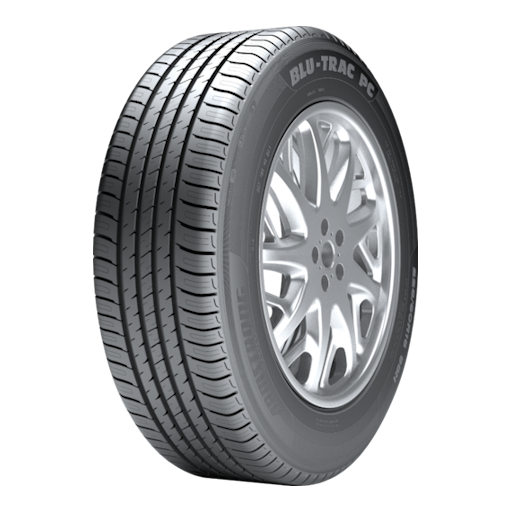
The Armstrong BLU-TRAC PC2 205/65 R15 is a passenger tyre developed for larger sedans, family vehicles, MPVs and road-oriented vehicles approved for this tyre size. Its asymmetric tread pattern is intended to provide stable road contact, controlled wet-weather drainage and comfortable everyday performance.
Longitudinal tread grooves and lateral channels help move water away from the tyre's contact area. Multiple sipes and tread edges provide additional gripping surfaces, supporting braking and steering control during wet or changing road conditions.
The inner tread area supports drainage, while the reinforced outer shoulder provides additional block stability during cornering, lane changes and highway manoeuvres. The broader tread width also creates a substantial contact area for straight-line road stability.
Broad Contact and Comfortable Road Manners
The 205 mm tread width supports stable road contact for larger and heavier passenger vehicles, while the 65-profile sidewall provides useful cushioning over road imperfections. This combination is suited to drivers who value a settled ride and confident highway behaviour.
Because the tyre is both relatively wide and tall, vehicle compatibility must be checked carefully. Incorrect fitment may affect wheel clearance, steering geometry, speedometer readings and suspension movement.
The 205/65 R15 size should only be installed where it is explicitly approved by the vehicle manufacturer and where the required load index, speed rating, wheel width and clearance specifications are satisfied.
BLU-TRAC PC2 Technology
Armstrong BLU-TRAC PC2 Tread Technology
Asymmetric passenger tread. The BLU-TRAC PC2 uses different tread structures across its inner and outer sections. The inner area supports water drainage and wet-road traction, while the more rigid outer area supports steering response, cornering stability and controlled road contact.
Wet-road drainage channels. Longitudinal grooves and connected lateral channels provide pathways for water to move away from the tyre's contact area, helping the tread maintain more consistent contact with wet road surfaces and reducing the likelihood of aquaplaning.
Reinforced shoulder ribs. Larger and more stable outer shoulder elements support the tyre under cornering loads, helping the vehicle remain predictable during turns, lane changes and normal highway manoeuvres.
Multiple sipes and gripping edges. Fine cuts and tread edges create additional contact points between the rubber and the road. These support traction and braking control, particularly when the surface is wet, dusty or slick.
Stable road contact. The tread blocks are arranged to support a consistent contact footprint during normal driving. This contributes to predictable steering response, balanced handling and more uniform wear when the tyre is correctly maintained.
Road-focused radial construction. The radial construction is intended for passenger-vehicle use, combining everyday ride comfort with the structural stability required for city roads, regular highway travel and normal family-car operation.
Controlled road noise. The road-oriented tread arrangement is designed to manage the sound created as individual tread blocks meet the road. Actual cabin noise will also depend on road texture, vehicle insulation, tyre pressure, wear condition and driving speed.
Wear management. The asymmetric, non-directional layout can support regular front-to-rear and cross-rotation schedules where the vehicle configuration permits. Correct inflation, wheel alignment, suspension condition and scheduled rotation remain essential for achieving even wear.
Tread-wear indicators. Moulded tread-wear indicator bars provide a visible reference for checking when the tread is approaching its replacement point. Tyres should also be inspected for cracking, cuts, bulges, puncture damage and irregular wear.
BLU-TRAC PC2 Features
- Asymmetric passenger-car tread pattern
- Separate inner and outer tread functions
- Longitudinal grooves for wet-road water evacuation
- Open lateral channels supporting drainage
- Multiple sipes and gripping edges for road traction
- Reinforced outer shoulder ribs for cornering stability
- Stable tread blocks for predictable steering response
- Road-focused design for city and highway driving
- Designed to support a smooth and settled ride
- Tread arrangement intended to manage road noise
- Wear-friendly layout when correctly maintained
- Rotation-compatible where the vehicle setup permits
- Radial passenger-tyre construction
- Moulded tread-wear indicators for easier inspection
- Suitable only for manufacturer-approved vehicle fitments
- Load index and speed rating must match vehicle requirements
Available Sizes in BLU-TRAC PC2
Understanding Tyre Size 205/65 R15 / How to Read Tyre Size
Vehicles with 205/65 R15 Tyre Size
What does 205/65 R15 mean?
205/65 R15 is the tyre size.
205 is the maximum width of the tyre in milimetres(mm). When the vehicle is fully loaded its width can expand maximum upto 205 milimetres(mm).
65 is the ratio among width and height of the tyre from its rim. it means that the height of the tyre is precisely 65% of the 205mm. Lower ratio improves road grip, but it reduces comfort to some extent.
R – refers to the method the tyre is produced. The letter “R” is found on all modern car tyres. It indicates the radial structure of tyre cosntructed with steel wires.
15 represents the diameter of the rim. It is a measurement in inches(“). This number should be rememberd as it is the measurement of the rims. It has to match exactly to what is mentioned in the car manual.
Specification: Armstrong BLU-TRAC PC2 205/65 R15
|
